

SpaceX started as a long shot in a Southern California warehouse. Twenty-four years later, the company completed the largest IPO in Wall Street history. This milestone is verified by official Nasdaq listings data. Along the way, the venture nearly went bankrupt after losing three consecutive rockets. They kept going anyway. Eventually, they flew NASA astronauts to the International Space Station.
- Related Reading: How to Buy SpaceX Stock: Every Legal Way for Retail Investors
If you are evaluating aerospace equities, this origin story is fundamental. It helps investors analyze the company’s current market moat. The early years explain its corporate structure. They also show why the NASA relationship ensures long-term revenue stability. This article covers how SpaceX started. We analyze Elon Musk’s initial goals and the critical moments before the June 2026 Nasdaq listing. This analysis is strictly for educational purposes and is not personalized financial advice.
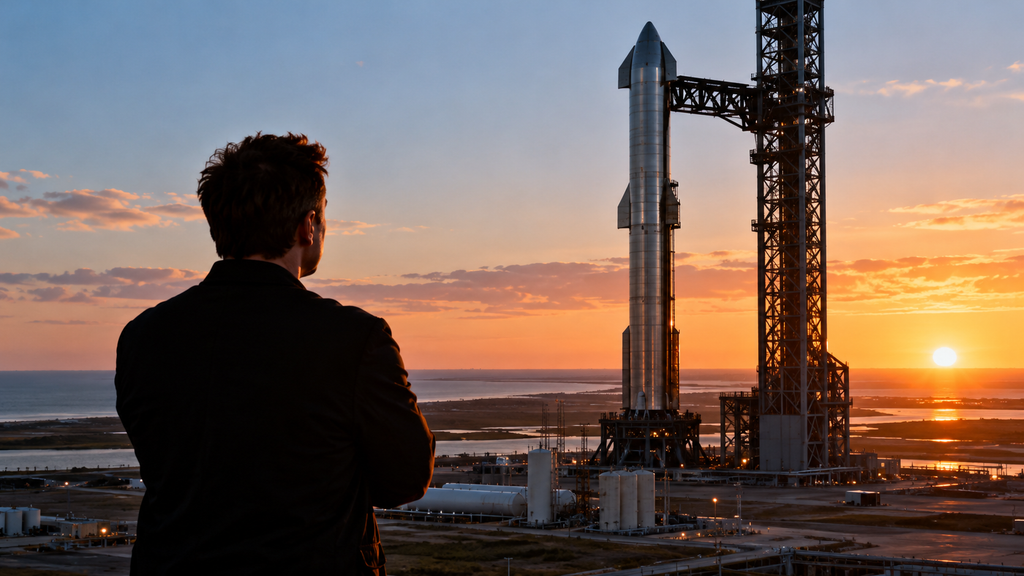
Where the Idea Came From
Musk made his first fortune in software. After capitalizing on high-profile tech exits, most notably the sale of PayPal to eBay, he shifted his attention—and his freshly liquid capital—to a sector with notoriously high barriers to entry. While tech founders typically reinvested in Silicon Valley, Musk took a massive financial gamble by bootstrapping a capital-intensive aerospace venture in 2002.
A rocket company wasn’t the original plan
The genesis of the project was actually a public relations stunt rather than a commercial enterprise. Musk initially engaged with the space community by donating $100,000 to the Mars Society in 2001 and came up with a project called Mars Oasis: land a small greenhouse on Mars and show the world a plant growing in Martian soil. The objective was to revitalize public interest in deep space exploration, a necessity Musk realized after scanning NASA’s website and finding no concrete plan for sending people to Mars.
The greenhouse still needed a ride, which led to a series of chaotic procurement attempts. Musk made two trips to Russia, in October 2001 and February 2002, hoping to buy a refurbished intercontinental ballistic missile (ICBM) to use as a launcher. Michael Griffin, who later ran NASA, joined him on the second trip. Neither trip produced a deal, largely because Russian officials didn’t take the dot-com millionaire seriously.
Cheaper rockets
That failure fundamentally altered the economics of commercial spaceflight. Instead of shopping for someone else’s rocket, Musk started asking whether a new company could build cheaper ones by optimizing the aerospace supply chain. In his later telling, drastically reducing the cost per kilogram to orbit was the missing piece of any sustainable Mars program. He laid out this macroeconomic thesis in a peer-reviewed 2017 paper, Making Humans a Multi-Planetary Species, published in the journal New Space. You don’t have to share the philosophical goal to see that cost-efficiency runs through the company’s entire corporate strategy. Every launch, every reuse milestone, and every NASA contract that follows in this story connects back to that single question of unit economics.
Founding SpaceX in 2002
The commercial launch market in 2002 was functionally a duopoly dominated by massive defense contractors with zero incentive to innovate on price. During a pivotal 2010 Senate hearing, company president Gwynne Shotwell—who joined the venture during its infancy as VP of business development—explained that the foundational thesis behind SpaceX was a clear market deficiency: the United States was rapidly losing its competitive edge due to prohibitive launch costs. To validate this market pain point, she cited a stark 2003 warning to Congress by Michael Griffin, who stated that the domestic space sector would stagnate without drastically cheaper transportation to low-Earth orbit (LEO).
That structural bottleneck formed the business case in a single sentence. Getting to orbit was cost-prohibitive, and the price of launch arbitrarily shaped the capital expenditure (CapEx) of every satellite and space mission that followed. To disrupt this, SpaceX pioneered a radical operational shift: extreme vertical integration. Instead of relying on a sprawling, multi-tiered defense supply chain that stacked profit margins at every stage, the company chose to manufacture its vehicles under one roof. By 2010, as Shotwell pointed out to lawmakers, this strategy allowed a lean team of nearly 1,000 employees to build the vast majority of the Falcon 9 in-house, fundamentally rewriting the manufacturing economics of the entire aerospace industry.
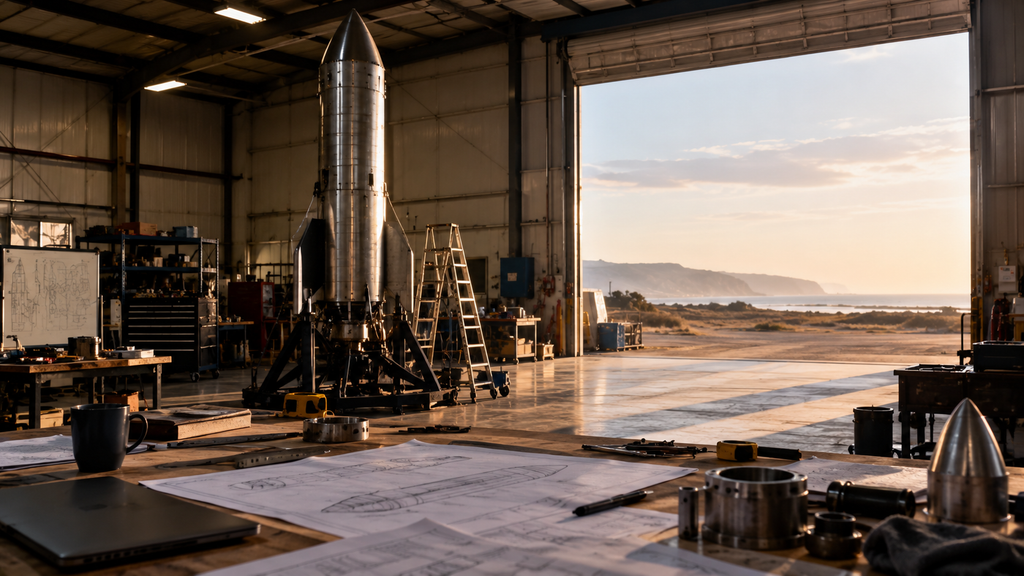
Three Failures, Then Orbit
The initial development phase of the Falcon 1 rocket pushed SpaceX to the brink of financial insolvency. Between 2006 and August 2008, the company suffered three consecutive launch failures due to technical anomalies. With remaining capital depleted to almost zero, a final fourth attempt was mounted on September 28, 2008.
This mission successfully reached orbit, marking a historic milestone for private spaceflight. This technical validation immediately unlocked critical institutional backing, as documented in the official NASA Falcon 1 flight history. By proving they could achieve orbit, SpaceX transitioned from a speculative startup into a viable commercial launch alternative.
NASA Becomes the Anchor Customer
For an aerospace startup, securing an anchor customer is a matter of institutional survival. In 2006, before SpaceX had ever successfully reached orbit, NASA selected the company for its Commercial Orbital Transportation Services (COTS) program. This public-private partnership provided a critical financial lifeline, injecting $396 million to co-develop a space station supply vehicle.
This non-dilutive funding culminated in December 2008—just three months after SpaceX’s first successful launch—with a $1.6 billion Commercial Resupply Services (CRS) contract. The timing highlighted a massive macroeconomic shift. With the Space Shuttle retiring, the U.S. faced a geopolitical and financial bottleneck, relying entirely on Russia at a steep cost of $51 million per seat. By capturing this contract, SpaceX didn’t just de-risk its cash flow; it positioned itself as the strategic defense and logistics backbone of U.S. space policy.

From Cargo to Crew
Following the NASA contracts, SpaceX systematically executed a roadmap focused on capital efficiency and operational scalability. On May 25, 2012, its Dragon capsule became the first commercial spacecraft to berth with the ISS. Three years later, the company achieved its ultimate cost-disruption milestone: landing a Falcon 9 first stage at Cape Canaveral. In commercial aerospace, booster reusability is the holy grail of margin expansion; it drastically reduced the marginal cost per launch, cementing a near-impenetrable market moat.
This technical validation unlocked high-margin institutional revenue. On May 30, 2020, SpaceX launched NASA astronauts Robert Behnken and Douglas Hurley to the ISS under the Commercial Crew Program. This milestone ended a costly nine-year domestic reliance on foreign launch providers. For investors, this flight was the ultimate proof of concept: SpaceX had successfully transitioned from a risky logistics startup into a mature, mission-critical infrastructure monopoly.
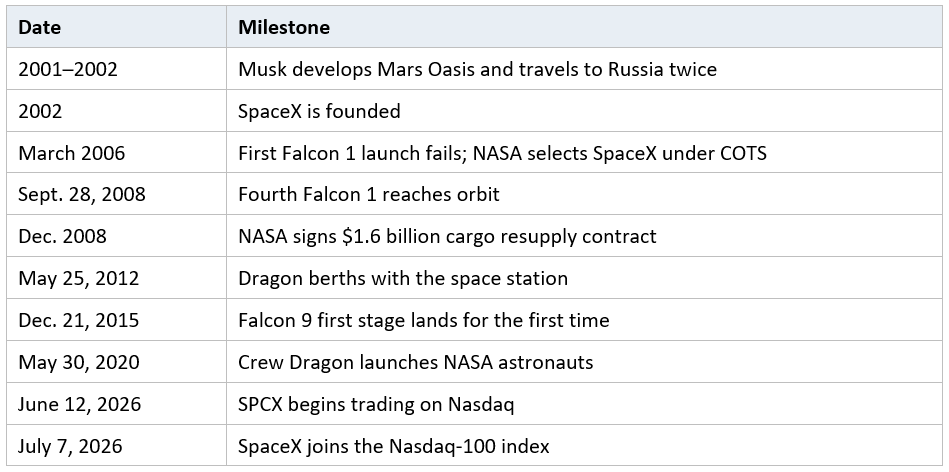
SpaceX Timeline at a Glance
To contextualize the company’s rapid transition from a pre-revenue concept to a public market heavyweight, tracking its operational and regulatory benchmarks is essential. The following timeline maps the critical milestones—from initial procurement failures to historic NASA contracts—that ultimately paved the way for its landmark 2026 public listing and subsequent index inclusion.
Going Public in 2026
After 24 years as a private venture, SpaceX altered the aerospace investment landscape by listing publicly. Shares began trading on the Nasdaq on June 12, 2026, under the ticker SPCX. The IPO priced at $135, opened at $150, and raised approximately $75 billion, according to the official Nasdaq IPO database. Weeks later, on July 7, 2026, the company was fast-tracked into the Nasdaq-100 index, a move that automatically triggered massive capital inflows from institutional passive funds.
This transition to public equity fundamentally shifts how investors must conduct due diligence. Financial metrics and profit margins are now bound to strict transparency through mandatory SEC filings on the EDGAR system. Serious capital allocators must rely on these audited disclosures rather than social media hype. Furthermore, a legendary origin story does not guarantee market valuation, and newly listed mega-caps remain highly vulnerable to extreme near-term volatility.
What the Origin Story Means for Investors
Two structural pillars stand out for capital allocators. First, SpaceX was engineered around solving a macroeconomic cost bottleneck rather than selling a single product; its reusable boosters are the ultimate proof of concept for corporate margin expansion. Second, federal defense and exploration contracts have provided a foundational revenue stream since 2006. While this institutional backing anchors their cash flow, it also introduces permanent political and budgetary tailwinds and risks.
However, defensive investors must filter out historical narrative hype. Survivorship bias is heavily present in this sector; SpaceX narrowly survived three catastrophic launch failures, a capital-depleting scenario that would bankrupt almost any other aerospace startup. Furthermore, a compelling origin story offers zero indication of what growth expectations are already priced into the stock today. Before allocating capital, investors should rigorously audit the official SEC disclosures to determine their risk tolerance for high-volatility equities.

Frequently Asked Questions
When was SpaceX founded?
SpaceX was founded in March 2002 by Elon Musk, aiming to disrupt the aerospace industry by drastically reducing commercial launch costs through vertical integration.
When did SpaceX go public?
Shares began trading on the Nasdaq on June 12, 2026, under the ticker SPCX. The stock was subsequently fast-tracked into the Nasdaq-100 index on July 7, 2026, triggering significant institutional passive fund tracking.
Is SpaceX profitable?
It depends on how you look at it. On paper, SpaceX is still running a net loss because Elon Musk pours billions into Starship and AI infrastructure. However, its satellite arm, Starlink, is quietly generating massive profit margins. To see the exact numbers and cut through the accounting paradox, check out our deep-dive analysis: Is SpaceX Profitable? What Public Reports Say.
Did SpaceX’s first rocket reach orbit?
No. The first three Falcon 1 launches resulted in catastrophic failures due to technical anomalies. The fourth flight successfully reached orbit on September 28, 2008, validating the company’s liquid-propellant architecture.
The Bottom Line
SpaceX has systematically shattered the historical aerospace cost bottleneck, evolving from a high-risk operational concept into a dominant, public infrastructure monopoly. By mastering rapid launch reusability, the venture has fundamentally captured the orbital economy.
Yet, past technical milestones do not justify an automatic buy signal today. Sophisticated capital allocators must transition from engineering awe to financial rigor—meticulously auditing official SEC disclosures and calculating portfolio risk tolerance before deploying capital.
Disclaimer:
This article is for educational purposes only and is not financial, investment, tax or legal advice. Investing involves risk, including the loss of your entire investment. Do your own research or consult a licensed professional before making decisions.
Sources
- Nasdaq.com – SpaceX (SPCX): Rocket Company Launches Historic IPO
- NASA.gov – NASA DM-2
- SEC.gov – eBay to Acquire PayPal
- SpaceNews.com – Mars Society Special Bulletin #43 – 31 May 2001
- Bloomberg.com – Elon Musk’s Space Dream Almost Killed Tesla
- NASA.gov – Michael Griffin
- SagePub.com – Making Humans a Multi-Planetary Species
- SpaceNews.com – Profile: Aiming to Break the Cost Barrier
- TheSpaceReview.com – Getting to know Michael Griffin
- CSIS.org – Maintaining the Space Edge
- SpaceflightNow.com – Falcon 9 booster rockets into orbit on dramatic first launch
- SpaceNews.com – SpaceX Successfully Launches Falcon 1 to Orbit
- NASA.gov – NASA Hails Success of Commercial Space Program Private Space Station Resupply Underway, Plans Readied for Astronauts
- SpaceflightNow.com – NASA calls upon commercial firms to serve space station
- SpaceFoundation.org – SpaceX Makes History as Dragon Docks With ISS
- SpaceflightNow.com – Round-trip rocket flight gives SpaceX a trifecta of successes
- NASA.gov – NASA’s SpaceX Demo-2 Resources Archive
- NBCNews.com – Q &A with SpaceX CEO Elon Musk
Written by L.Gomez · Last updated: October 28, 2026